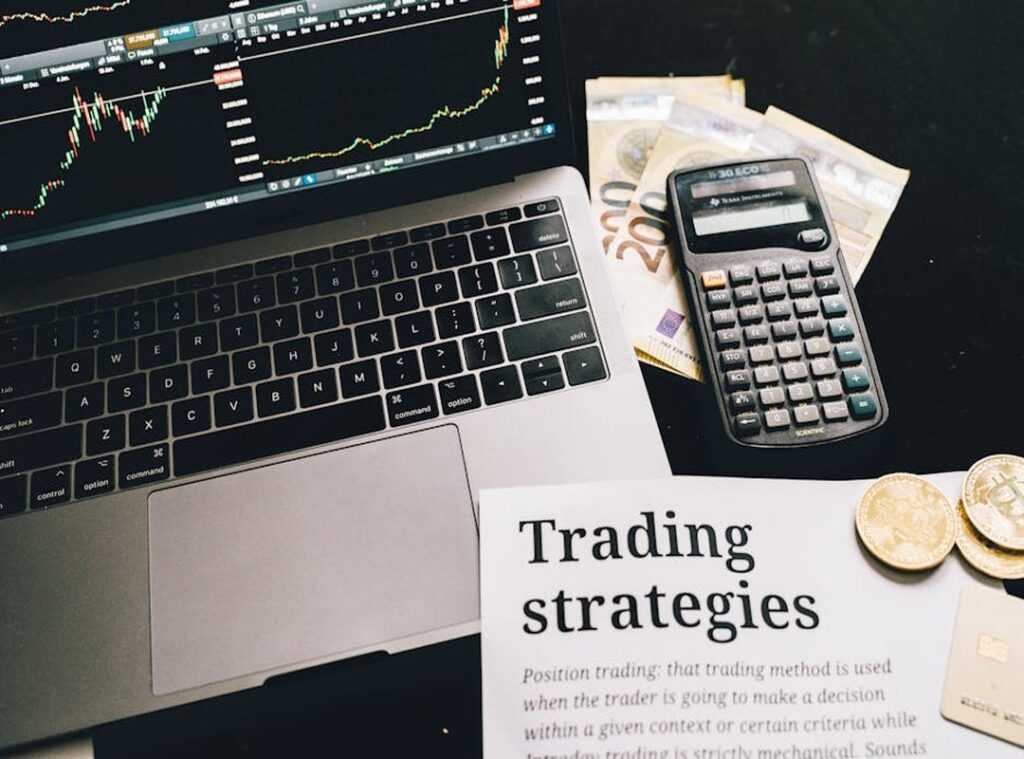

Traders like you are constantly on the hunt for the hard to find “perfect” plan online, right? I get it, I’ve been there. But let’s be real: the problem isn’t finding a plan, it’s failing to build one that aligns with your mindset and lifestyle.
I’ve spent years digging into global market principles, especially in the changing Asian markets, to figure out what really works. Trust me, it’s not about luck. This article gives you a clear, actionable system for creating your own winning trading plan.
Shift from a gambler’s mindset to a true professional’s approach. Ready to dive in?
Trading Success: More Than Just Wins
People think success in trading means winning every trade. That’s a myth. Imagine a baseball player.
Even the best fail more often than they succeed at bat. Yet, they’re still stars because of their average. Trading works the same way.
Real success isn’t about winning every time. It’s about consistency, profitability, and longevity.
Consistency means having a positive expectancy over many trades. It’s like knowing you’ll hit enough home runs to keep your average up. Profitability is about making sure your returns are positive after adjusting for risk.
It’s not just about how much you make. It’s about making smart, risk-adjusted choices.
Longevity is key. Survive the drawdowns and live to trade another day. A winning trading plan doesn’t predict the future.
It gives you a statistical edge over time. That’s the real secret.
This mindset shift separates amateurs from the pros. It’s the first step in becoming a disciplined trader. If you’re curious about how psychology plays into this, you might want to explore the role psychology successful trading.
Remember, trading is about the long game. Just like in baseball.
Trading’s Three Pillars: Your Blueprint for Success
Thinking of crafting a winning trading plan? Let’s get real. Trading isn’t magic.
It’s architecture. You’ve got to lay down a solid foundation or it’ll all crumble. And we’re talking three pillars here.
Not four, not two. Three.
Pillar 1: Market Analysis. It’s your “What & When.” Look, there are three main approaches. Technical, fundamental, and quantitative.
They’re tools, not wands from Hogwarts. Technical analysis? You’re staring at charts.
Patterns tell you a story if you know how to read them. Fundamental analysis is all about the news, the reports, the company earnings. Quantitative?
Numbers. Lots of them. You can’t wing it here.
You need clear, non-negotiable rules for entering and exiting trades. Choose your style and stick to it.
Let’s move on. Pillar 2: Risk Management. If you don’t nail this, you’re toast.
It’s your “How Much.” The 1% Rule is gospel. Never risk more than 1% of your account on a single trade. Sounds strict?
It is. Position sizing is next. Calculate the right number of shares or lots like your life depends on it.
It kinda does. Then, there’s the Risk/Reward Ratio. Only take trades where the potential gain is way bigger than the loss.
Like 2:1 or 3:1. This is survival.
Finally, Pillar 3: Trading Psychology. This is your “Why & How.” It’s the glue. Without this, the other pillars are pointless.
Discipline is key. You need to follow your own rules. Patience?
You need it to wait for high-quality setups. Emotional detachment is key too. Handle wins and losses without letting them cloud your judgment.
Trading isn’t for the faint-hearted. But if you’re serious, get your pillars right. And hey, if you want to dig deeper into how to create a trading plan, that’s a good place to start.
Remember, trading is tough, but with the right plan, you stand a chance. Your plan is your blueprint. Stick to it, or prepare to lose.
Simple as that.
Build Your Plan: A 5-Step System
Creating a winning trading plan isn’t just about numbers. It’s about knowing yourself and the market. Let’s get straight to it.

Step 1: Define Your Trader Identity
Who are you as a trader? This is the most key question. Are you conservative, moderate, or aggressive with your risk tolerance?
Be honest. It’s not about what sounds impressive; it’s about what lets you sleep at night. And time.
How much can you realistically commit? If you’re juggling a day job, you might lean towards swing trading. If you’re all in, day trading could be your thing.
Don’t forget your financial goals. Are you aiming for steady growth or a big score? Define these clearly.
Step 2: Choose Your Playground
Markets are vast. You can’t play everywhere. Pick one that suits your style.
If you’re a busy professional, maybe the Asian stock indices like Nikkei or Hang Seng fit your swing trading on daily charts. On the other hand, a full-time trader might dive into forex pairs using 1-hour charts. It’s about finding what aligns with your identity.
It’s your game (play) where you feel comfortable.
Step 3: Select Your Tools & Define Your Rules
Tools and rules keep you grounded. Let’s say you’re into trend-following. Your entry rule could be: price closes above the 50-day moving average with rising volume.
Exit when it drops below the 20-day moving average. Clear, right? Rules should be mechanical, leaving no room for doubt.
This isn’t time for guesswork. Every decision should be precise and unambiguous. Remember, the market doesn’t care how you feel.
Step 4: Backtest for an Edge
Backtesting is like a time machine for traders. You manually check how your plan would have worked in the past. But don’t chase perfection.
It’s about finding a positive expectancy over 50-100 trades, not a flawless record. And no, you won’t always win. But you need to win more than you lose.
This is where you test your hypotheses against reality. Grasp this, and you’re one step ahead.
Step 5: Forward-Test in a Demo Account
This step is your dress rehearsal. Test your plan without risking real money. Trade it in a demo account for a month.
See how it feels. Live market conditions can be different from backtesting. This builds your confidence before you throw real cash into the game.
Think of it as a dry run before the big show.
For those diving deeper, check out the Advanced Trading Strategies You Should Know. It’s a powerhouse of takeaways you don’t want to miss.
And there you have it. A system isn’t about rigid steps. It’s about crafting something that resonates with you.
This approach makes your trading plan not just a document, but a reflection of who you are and what you aim to achieve.
Avoiding the Pitfalls: Why Most Strategies Fail
Let’s face it: most strategies fail because people can’t stick to them. It’s like everyone has strategic ADHD. You jump ship after a few losses without trusting the process.
This is a huge mistake. A winning trading plan isn’t about perfection. It’s about sticking with something long enough to see results.
Sure, you might lose a few trades initially, but that’s part of the game.
Risk management? That’s another pitfall. You’re not a casino.
Blowing your account on one oversized trade is just foolish. Keep your emotions in check. And the trading journal?
Seriously, why aren’t you tracking your trades? It’s like flying blind without it. You need to see where you’re messing up and where you can improve.
Chasing perfection is a trap. You’ll just end up paralyzed. Embrace the losses as lessons.
After all, trading isn’t about avoiding losses; it’s about managing them smartly.
Forge Your Own Trading Path
Chasing a pre-made plan? It’s a dead end. The winning trading plan doesn’t come from a one-size-fits-all guide.
It’s crafted by you, tailored to your strengths. Sure, it takes work. But guess what? the real edge lies.
Want to start winning? Stop searching, start doing. Grab a notebook.
Define who you are as a trader. Commit to understanding analysis, risk management, psychology. Your first step isn’t another online search.
It’s diving into the system above. Begin today. Your success story starts now.
Consistent trading is waiting. So why not take that step and own it?
 Zyvaris Tornhaven has opinions about global investment insights. Informed ones, backed by real experience — but opinions nonetheless, and they doesn't try to disguise them as neutral observation. They thinks a lot of what gets written about Global Investment Insights, Expert Breakdowns, Practical Portfolio Optimization is either too cautious to be useful or too confident to be credible, and they's work tends to sit deliberately in the space between those two failure modes.
Reading Zyvaris's pieces, you get the sense of someone who has thought about this stuff seriously and arrived at actual conclusions — not just collected a range of perspectives and declined to pick one. That can be uncomfortable when they lands on something you disagree with. It's also why the writing is worth engaging with. Zyvaris isn't interested in telling people what they want to hear. They is interested in telling them what they actually thinks, with enough reasoning behind it that you can push back if you want to. That kind of intellectual honesty is rarer than it should be.
What Zyvaris is best at is the moment when a familiar topic reveals something unexpected — when the conventional wisdom turns out to be slightly off, or when a small shift in framing changes everything. They finds those moments consistently, which is why they's work tends to generate real discussion rather than just passive agreement.
Zyvaris Tornhaven has opinions about global investment insights. Informed ones, backed by real experience — but opinions nonetheless, and they doesn't try to disguise them as neutral observation. They thinks a lot of what gets written about Global Investment Insights, Expert Breakdowns, Practical Portfolio Optimization is either too cautious to be useful or too confident to be credible, and they's work tends to sit deliberately in the space between those two failure modes.
Reading Zyvaris's pieces, you get the sense of someone who has thought about this stuff seriously and arrived at actual conclusions — not just collected a range of perspectives and declined to pick one. That can be uncomfortable when they lands on something you disagree with. It's also why the writing is worth engaging with. Zyvaris isn't interested in telling people what they want to hear. They is interested in telling them what they actually thinks, with enough reasoning behind it that you can push back if you want to. That kind of intellectual honesty is rarer than it should be.
What Zyvaris is best at is the moment when a familiar topic reveals something unexpected — when the conventional wisdom turns out to be slightly off, or when a small shift in framing changes everything. They finds those moments consistently, which is why they's work tends to generate real discussion rather than just passive agreement.