

Do you ever feel swamped by the endless financial news, conflicting charts, and opinions? You’re not alone. It’s easy to drown in market noise.
But I’ve got your back. This isn’t just another dull academic explanation. We’re diving into the real stuff.
Let’s cut through the clutter with a clear guide on market trends takeaways. I know how wild these markets can get. With deep focus on interpreting fast-moving markets, I’ve learned what works and what doesn’t.
You’re in good hands here. We’ll explore a practical method to identify meaningful patterns. Forget about getting lost in the chatter.
By the end of this, you’ll know how to get through the noise with confidence. Ready to find clarity in chaos? Let’s get to it.
Market Trend Analysis: Riding the Market Waves
Market trend analysis is like reading a river’s current before paddling. You wouldn’t just jump in, right? You need to know where you’re headed first.
It’s all about understanding where prices are likely to go. Think of the trends: uptrend, downtrend, and sideways. Uptrend means higher highs and lows (prices climbing like Beyoncé’s music sales during a surprise album drop).
Downtrend? Lower highs and lows. Like that stock you regret buying.
And sideways? Prices bounce around without picking a direction.
Long-term trends (secular) are like the slow shift towards digital payments in Southeast Asia. It’s a big shift, happening over years. Medium-term (primary) trends span months, reflecting more immediate market movements (think of how the latest iPhone release impacts Apple stock).
They’ve got you covered with some solid takeaways.
Short-term (secondary) trends are those pesky daily price swings of a fintech stock. They might drive you mad, but they’re great for day traders looking for quick wins. Interested in expert tips successful day trading?
Analyzing these trends gives you market trends takeaways. You can anticipate market movements, make informed decisions, and hopefully, not paddle upstream. So, are you ready to ride the wave?
The Modern Analyst’s Toolkit: Key Data & Indicators
Fundamental Data Sources
When digging into market analysis, I rely on a few key data sources. First up: economic reports like GDP and inflation figures. They’re the backbone of understanding economic health.
Next, corporate earnings reports. Numbers don’t lie (well, mostly), and these reports shine a light on a company’s performance. Lastly, central bank statements can move markets faster than a viral TikTok.
They reveal interest rate policies that impact everything from mortgages to market speculation.
There’s a specific source I pay attention to for Asia: the Caixin Purchasing Managers’ Index (PMI). It’s a gem for takeaways into China’s manufacturing sector, which is a significant driver of the global economy. If you overlook this, you might as well be flying blind.
Important Technical Indicators
Now, let’s talk technical indicators. They’re not magic wands, but they help quantify market sentiment and momentum. Start with Moving Averages, like the 50-day vs. the 200-day.
They smooth out price data, showing the trend direction. The Relative Strength Index (RSI) is another must-have. It measures momentum and tells you if a stock is overbought or oversold.
Very handy when you’re trying to time your moves.
Don’t forget Volume analysis, which can confirm price trends. If prices rise on high volume, it’s a stronger signal than a rise on low volume. But remember, these tools don’t predict the future.
They just offer market trends takeaways that help you make better decisions. Pro tip: Always cross-check indicators. Relying on one can lead you astray.
Trend Analysis: Your 4-Step System Unlocked
Ready to dive into trend analysis? Let’s cut the fluff and get to the good stuff. We’re talking practical steps you can actually use.
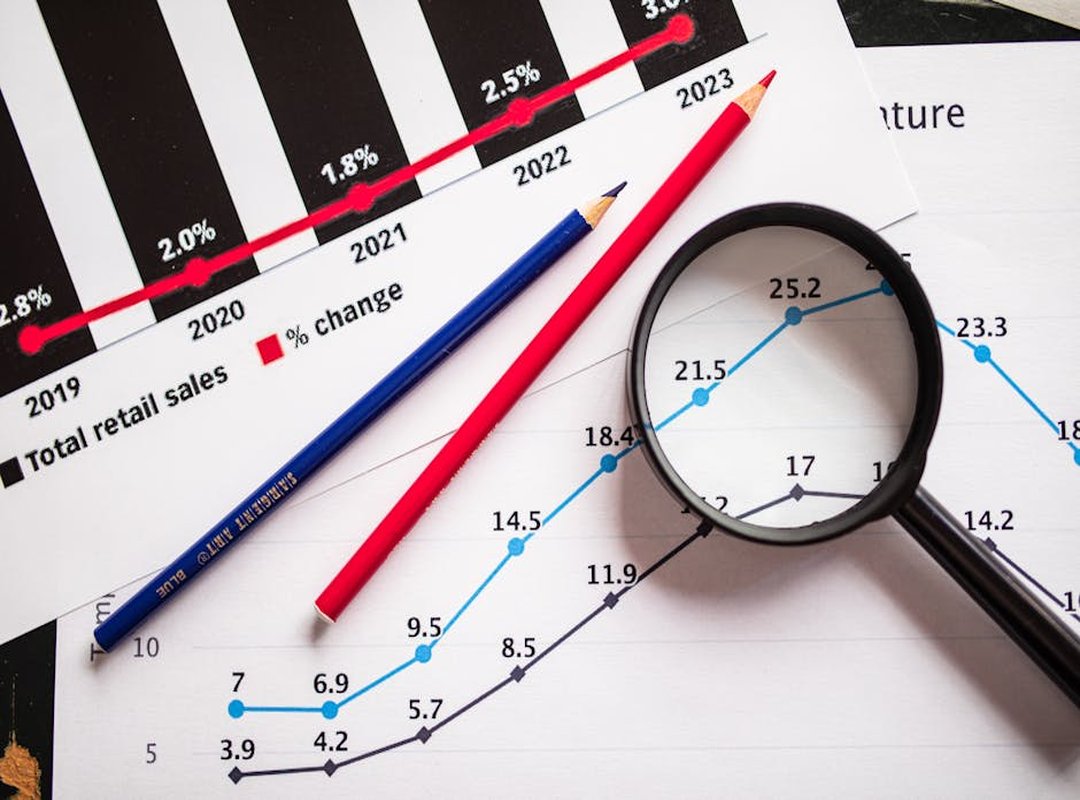
Here’s your 4-step guide to mastering market trends takeaways.
Step 1: Define Your Time Horizon & Scope. Are you a day trader or do you think long-term? This shapes everything.
Are we analyzing a single stock, a commodity, or a sector like Asian semiconductors? Know your focus. It keeps you sharp and fast.
Step 2: Gather Your Data. You need a blend of technical and fundamental data. Why both?
Technical data shows patterns, while fundamental data fills in the “why.” Use tools like trading platforms or data services. They’re gold mines. You can’t just rely on one type of data and expect a complete picture.
Step 3: Identify the Primary Trend. Look at your charts. Spot those higher highs and lows.
Use moving averages for confirmation. If the trend’s up, it usually stays that way for a while. But don’t just take my word for it.
See it for yourself on the charts.
Step 4: Formulate a Hypothesis & Look for Confirmation. This is where you get to be a detective. Create a testable idea like, “The trend is up due to strong earnings and momentum.” Then, hunt for signals that confirm, not just data that fits your bias.
That’s where the real skill lies.
Want more on how experts see these shifts coming? Check out How Experts Predict Economic Shifts. They offer takeaways that can seriously level up your game.
Pro tip: Keep an open mind. Trends can flip on a dime. Always back your analysis with real-world examples.
And remember, practice makes perfect. Happy analyzing!
Sidestepping Common Pitfalls in Trading
You know what’s crazy? How often we fall into the trap of confirmation bias. We cherry-pick data that supports what we already believe.
Sure, it feels good, but it’s a one-way ticket to financial disasters. Does anyone talk about actively hunting for counter-arguments or those bearish signals? Probably not enough.
But it’s key. Keep questioning your theories. Look for evidence that disagrees with you.
It might save you.
Then there’s the dreaded analysis paralysis. Too much information, too little action. It’s like being stuck in a Netflix menu with no idea what to watch.
You think you’ve got all the time in the world, but the market doesn’t wait. If you’re overwhelmed, stick to your predefined system and focus on a few key indicators. Seriously, stop complicating it.
More data isn’t always better.
And what about ignoring the macro context? Picture this: you’re so deep into one stock’s chart that you miss a major global shift. Sounds familiar?
Zoom out. Look at the bigger picture. The global economy matters, maybe even more than that stock you’re obsessed with.
In this whirlwind of market trends takeaways, it’s easy to trip over these pitfalls. But sidestepping them? That’s how you make sure your trading decisions aren’t just based on whims or tunnel vision.
Stay alert. Don’t get too comfortable with the familiar. Make informed choices, not just convenient ones.
Challenge the norms. Your portfolio will thank you.
Open up Your Market Potential
Market uncertainty and information overload. Frustrating, right? We’ve all been there.
Yet, the solution’s simpler than it looks. Embrace a disciplined approach to market trend analysis. It’s not about predicting the future.
It’s about clarity. Being proactive.
Stop being a follower. Become an analyst. Understand the market trends takeaways that let you get through these choppy waters.
No more guesswork. This system transforms you from reactive to proactive.
Here’s what you do next: take that 4-step system and apply it today. Pick a market. One you’re curious about.
Dive in. Or, if you’re feeling ambitious, explore more advanced strategies. There’s a world of knowledge waiting.
Why hesitate?
Need proof? Just look at how many top analysts swear by structured analysis. Don’t let the market rule you.
Rule the market.
Start now. Don’t just read about it. Do it.
Your competitive edge is waiting.
 Zyvaris Tornhaven has opinions about global investment insights. Informed ones, backed by real experience — but opinions nonetheless, and they doesn't try to disguise them as neutral observation. They thinks a lot of what gets written about Global Investment Insights, Expert Breakdowns, Practical Portfolio Optimization is either too cautious to be useful or too confident to be credible, and they's work tends to sit deliberately in the space between those two failure modes.
Reading Zyvaris's pieces, you get the sense of someone who has thought about this stuff seriously and arrived at actual conclusions — not just collected a range of perspectives and declined to pick one. That can be uncomfortable when they lands on something you disagree with. It's also why the writing is worth engaging with. Zyvaris isn't interested in telling people what they want to hear. They is interested in telling them what they actually thinks, with enough reasoning behind it that you can push back if you want to. That kind of intellectual honesty is rarer than it should be.
What Zyvaris is best at is the moment when a familiar topic reveals something unexpected — when the conventional wisdom turns out to be slightly off, or when a small shift in framing changes everything. They finds those moments consistently, which is why they's work tends to generate real discussion rather than just passive agreement.
Zyvaris Tornhaven has opinions about global investment insights. Informed ones, backed by real experience — but opinions nonetheless, and they doesn't try to disguise them as neutral observation. They thinks a lot of what gets written about Global Investment Insights, Expert Breakdowns, Practical Portfolio Optimization is either too cautious to be useful or too confident to be credible, and they's work tends to sit deliberately in the space between those two failure modes.
Reading Zyvaris's pieces, you get the sense of someone who has thought about this stuff seriously and arrived at actual conclusions — not just collected a range of perspectives and declined to pick one. That can be uncomfortable when they lands on something you disagree with. It's also why the writing is worth engaging with. Zyvaris isn't interested in telling people what they want to hear. They is interested in telling them what they actually thinks, with enough reasoning behind it that you can push back if you want to. That kind of intellectual honesty is rarer than it should be.
What Zyvaris is best at is the moment when a familiar topic reveals something unexpected — when the conventional wisdom turns out to be slightly off, or when a small shift in framing changes everything. They finds those moments consistently, which is why they's work tends to generate real discussion rather than just passive agreement.