
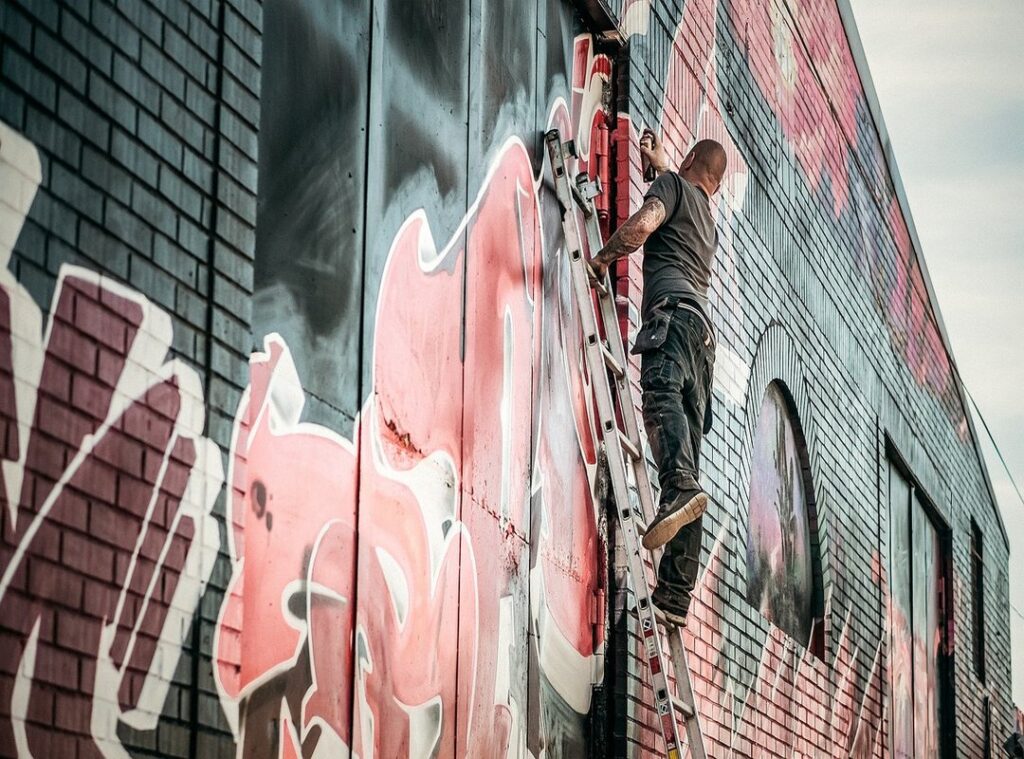
Graffiti art has this bold energy that just grabs you. It’s all about vibrant colors and unique styles that make you stop and stare. But here’s the thing: a lot of people think creating chidos graffitis faciles is only for those with years of practice or natural talent.
That’s not true at all. This guide will break it down into simple, manageable steps for absolute beginners. By the end, you’ll have the skills to sketch your first cool, easy graffiti piece.
All you need is a piece of paper and a pencil. No prior experience necessary, and let’s get started.
The Building Blocks: What Makes Graffiti Look ‘Cool’ and ‘Easy’?
I remember the first time I tried to do graffiti. It was a mess. I thought I needed to create some sprawling, complex mural to impress my friends.
Boy, was I wrong.
All great graffiti starts with the fundamentals. Not those fancy, intricate designs you see in magazines. No, it’s about mastering the basics.
Bubble letters are the number one starting point for beginners. Why, and because they have forgiving and simple shapes.
You can mess up a bit and still make it look good.
Next up, there’s the concept of a ‘throw-up’ or ‘throwie.’ It’s a quick, two-color design that focuses on letter form and speed. Perfect for when you need to get in and out fast.
Adding a simple 3D effect can make your letters pop. Just add a ‘drop shadow’ or block shading. It’s a small touch, but it makes a big difference.
Flow is key. Making sure your letters connect or overlap in a way that looks natural and stylish. It’s like writing a word, but each letter flows into the next.
Simple additions like stars, crowns, arrows, or halos can add personality without adding much difficulty. These little touches can turn chidos graffitis faciles into something unique.
So, start with the basics, and master them. Then, you can move on to more complex stuff.
Trust me, it’s worth it.
Your First Piece: A 5-Step Guide from Blank Page to Finished Art
Starting with a simple 3-4 letter word like ‘ART’, ‘LOVE’, or your initials can make the process less daunting.
First, lightly sketch the basic ‘skeleton’ of the letters with a pencil. Focus on consistent size and spacing. This step is crucial for a balanced look.
Next, draw the ‘bubble’ or ‘block’ outline around the skeleton. Be bold and exaggerate the shapes. This is where you can really let your creativity shine.
Now, add the 3D effect. Pick a direction, say down and to the right, and draw short, parallel lines from every corner. Then connect them.
This gives your letters depth and makes them pop off the page.
Plan the ‘fill’. Easy fills like diagonal lines, polka dots, or a simple one-color shade work great. These simple patterns can transform your piece into something unique.
Finally, go over the final design with a thick black marker. This creates a clean, powerful outline that makes the colors stand out.
By following these steps, you’ll not only create a visually striking piece but also gain confidence in your artistic skills. Plus, it’s a fun and relaxing way to express yourself.
Pro tip: Try using chidos graffitis faciles for some cool, easy-to-do graffiti styles. It adds an extra layer of creativity and personal touch to your art. chidos graffitis faciles
4 Simple Graffiti Styles to Try Today

Style 1: The Classic Bubble Letter, and think of a balloon for bubble letters. This style is soft, rounded, and overlapping.
It’s friendly and perfect for beginners.
Style 2: The Hard-Edge Blockbuster, and imagine building blocks for blockbusters. This style uses straight lines and sharp corners, often filling a large rectangular space.
It’s powerful and easy to keep uniform.
Style 3: The Simple Wildstyle, and don’t be intimidated by the name. A beginner version involves adding one or two simple arrows or connections that interlock the letters.
It adds a bit of complexity without overwhelming you.
Style 4: The Stencil Look. Picture clean breaks and sharp lines, as if they were made from a physical stencil. This style is modern and very clean.
It’s all about precision and clarity.
Chidos graffitis faciles—these styles are not just fun but also a great way to express yourself creatively.
What’s next, and you might be wondering where to start. Grab a sketchbook and practice these styles with pencil first.
Once you feel comfortable, move on to spray paint in a safe, legal area.
Remember, graffiti is an art form, and like any art, it takes practice. Don’t get discouraged if your first attempts don’t look perfect. Keep at it, and you’ll see improvement over time.
Essential Tools and Pro Tips for Beginners
When you’re just starting out, your toolkit matters. A SKETCHBOOK is a must. It’s where you’ll track your progress and see how far you’ve come.
Don’t skimp on the pencil and eraser either. Get something decent, not the cheapest stuff at the dollar store.
A set of black markers with different tip sizes is key. You need variety to experiment and find what works for you. For color, start with basic colored markers or even highlighters.
They’re affordable and great for practicing fills.
Pro Tip #1: Always start with a light pencil sketch. NEVER go straight to marker. Mistakes are permanent, and trust me, you’ll make them.
Pro Tip #2: Look for inspiration everywhere—in logos, fonts, and professional graffiti. But focus on developing your own simple style first. CHIDOS GRAFFITIS FACILES can be a good starting point, but don’t get stuck there.
Your unique touch is what will set you apart.
Start Sketching Your Signature Style Now
Creating cool-looking graffiti is a skill that anyone can learn by starting with the basics. The simple 5-step process includes sketch, outline, 3D, fill, and final ink.
chidos graffitis faciles is all about taking those first steps and not being afraid to make mistakes. Remember, the most important ingredient is practice. Your first piece doesn’t need to be perfect.
Stop reading and start doing. Grab your pencil, pick a word, and bring your first piece of graffiti art to life right now.
 Ask Gary Pacheconolo how they got into financial pulse and you'll probably get a longer answer than you expected. The short version: Gary started doing it, got genuinely hooked, and at some point realized they had accumulated enough hard-won knowledge that it would be a waste not to share it. So they started writing.
What makes Gary worth reading is that they skips the obvious stuff. Nobody needs another surface-level take on Financial Pulse, Global Investment Insights, Expert Breakdowns. What readers actually want is the nuance — the part that only becomes clear after you've made a few mistakes and figured out why. That's the territory Gary operates in. The writing is direct, occasionally blunt, and always built around what's actually true rather than what sounds good in an article. They has little patience for filler, which means they's pieces tend to be denser with real information than the average post on the same subject.
Gary doesn't write to impress anyone. They writes because they has things to say that they genuinely thinks people should hear. That motivation — basic as it sounds — produces something noticeably different from content written for clicks or word count. Readers pick up on it. The comments on Gary's work tend to reflect that.
Ask Gary Pacheconolo how they got into financial pulse and you'll probably get a longer answer than you expected. The short version: Gary started doing it, got genuinely hooked, and at some point realized they had accumulated enough hard-won knowledge that it would be a waste not to share it. So they started writing.
What makes Gary worth reading is that they skips the obvious stuff. Nobody needs another surface-level take on Financial Pulse, Global Investment Insights, Expert Breakdowns. What readers actually want is the nuance — the part that only becomes clear after you've made a few mistakes and figured out why. That's the territory Gary operates in. The writing is direct, occasionally blunt, and always built around what's actually true rather than what sounds good in an article. They has little patience for filler, which means they's pieces tend to be denser with real information than the average post on the same subject.
Gary doesn't write to impress anyone. They writes because they has things to say that they genuinely thinks people should hear. That motivation — basic as it sounds — produces something noticeably different from content written for clicks or word count. Readers pick up on it. The comments on Gary's work tend to reflect that.