
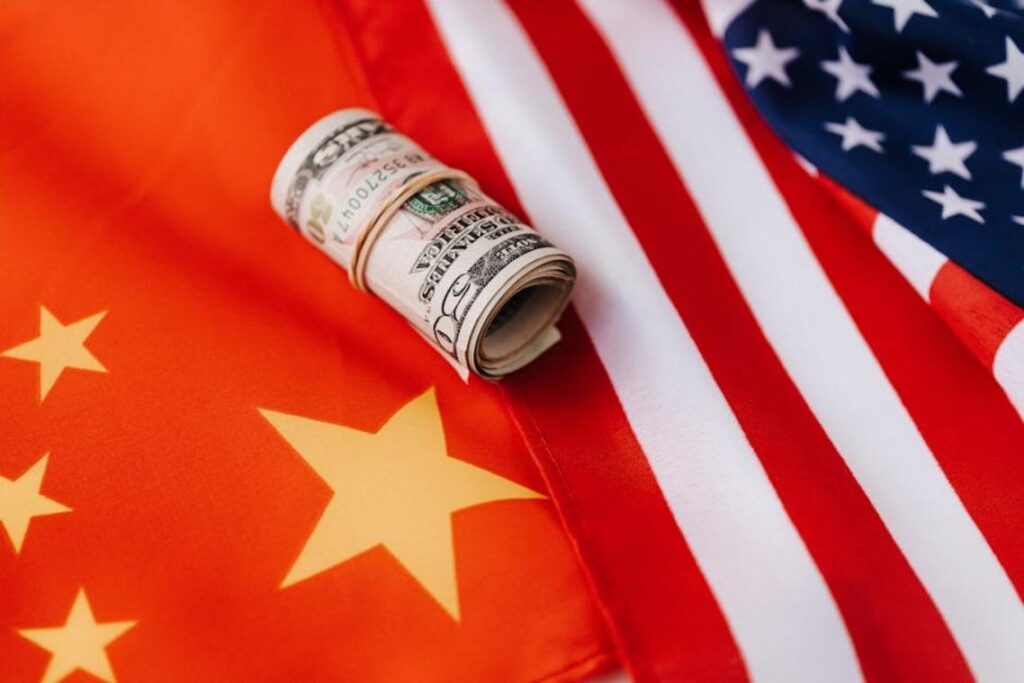
If you’re tracking Asia-focused markets, you’re likely looking for clear, timely insights that cut through global noise and highlight what actually moves prices. With shifting monetary policies, cross-border capital flows, and sector-specific volatility shaping today’s environment, staying ahead requires more than headlines—it demands context, strategy, and precision.
This article delivers a focused breakdown of the latest financial pulse updates, actionable trading strategies, and Asia-centric market trends that matter right now. We analyze macroeconomic signals, regional performance drivers, and portfolio positioning tactics to help you navigate uncertainty and identify opportunity with confidence.
Our insights are grounded in continuous market monitoring, data-driven analysis, and a disciplined approach to global investment research. By combining real-time developments with proven portfolio optimization principles, this guide is designed to help both active traders and long-term investors make informed, strategic decisions in an increasingly interconnected financial landscape.
Global markets face a pivotal week, with a convergence of high-impact releases poised to reset risk appetite. Traders feel the tension; volatility thrives on uncertainty. The challenge isn’t information overload—it’s knowing which data shifts capital flows.
This preview cuts through the noise, spotlighting the weekly economic calendar events most likely to move equities, bonds, currencies, and commodities. Consensus says inflation prints always dominate. I disagree. Liquidity signals and forward guidance often matter more than headline numbers (yes, even if Twitter disagrees).
Expect reactions around:
- Central bank rate decisions
Position defensively, hedge selectively, and treat surprises as opportunity, not panic.
Inflation in the Spotlight: The U.S. CPI Report
The Consumer Price Index (CPI) measures the average change in prices consumers pay for goods and services. In simple terms, it tracks inflation—how fast your grocery bill, rent, or Netflix subscription is rising (yes, even that). Because it reflects real-world price pressures, CPI heavily influences Federal Reserve rate decisions and, by extension, global markets.
Market Expectations
Consensus forecasts currently call for:
- Headline CPI: 0.3% month-over-month
- Core CPI (ex-food and energy): 0.3% month-over-month
The “whisper number”—an unofficial trader estimate—leans slightly hotter, suggesting sticky services inflation.
Potential Scenarios & Impact
- Hotter-than-expected print: Strengthens odds of prolonged higher rates. USD likely rallies, equities may sell off, and Treasury yields climb.
- Cooler-than-expected print: Fuels rate-cut bets, weakens USD, and sparks a risk-on rally in stocks and crypto.
Inter-market Analysis
In FX, EUR/USD typically drops on strong CPI, while USD/JPY may surge as yield differentials widen. Gold often falls on hotter data due to rising real yields. Traders should monitor weekly economic calendar events for positioning clues before volatility spikes (pro tip: avoid oversized trades into the release).
Gauging Industrial Health: German Factory Orders & Eurozone Sentiment
German Factory Orders and the ZEW Economic Sentiment survey are classic leading indicators—data points that signal where the economy may head before GDP confirms it. Factory Orders track new contracts for manufactured goods (think BMW export demand), while ZEW measures investor expectations for the next six months. Together, they offer a FORWARD LOOK at Europe’s growth engine.
Why It Matters Now
With recession risks lingering and inflation cooling, these releases feed directly into the ECB rate debate. Strong orders and upbeat sentiment strengthen the hawkish case (higher-for-longer rates). Weak prints revive dovish expectations and bond rallies. Critics argue these surveys are “soft data” and unreliable. Fair. But historically, sharp ZEW swings have preceded turning points in German industrial production (ZEW Mannheim data), making them too influential to ignore.
- EUR volatility: Misses often pressure the euro.
- DAX reactions: Export-heavy stocks amplify moves.
- Bund yields: Growth fears typically push yields lower.
What others miss? The Asia-Europe trade loop. Softer German demand reduces imports from export-driven Asian economies—impacting supply chains from semiconductors to machinery.
Traders scanning weekly economic calendar events should treat these releases as momentum catalysts, not isolated prints (pro tip: compare revisions, not just headlines).
Asia’s Growth Barometer: China’s Trade Balance Data
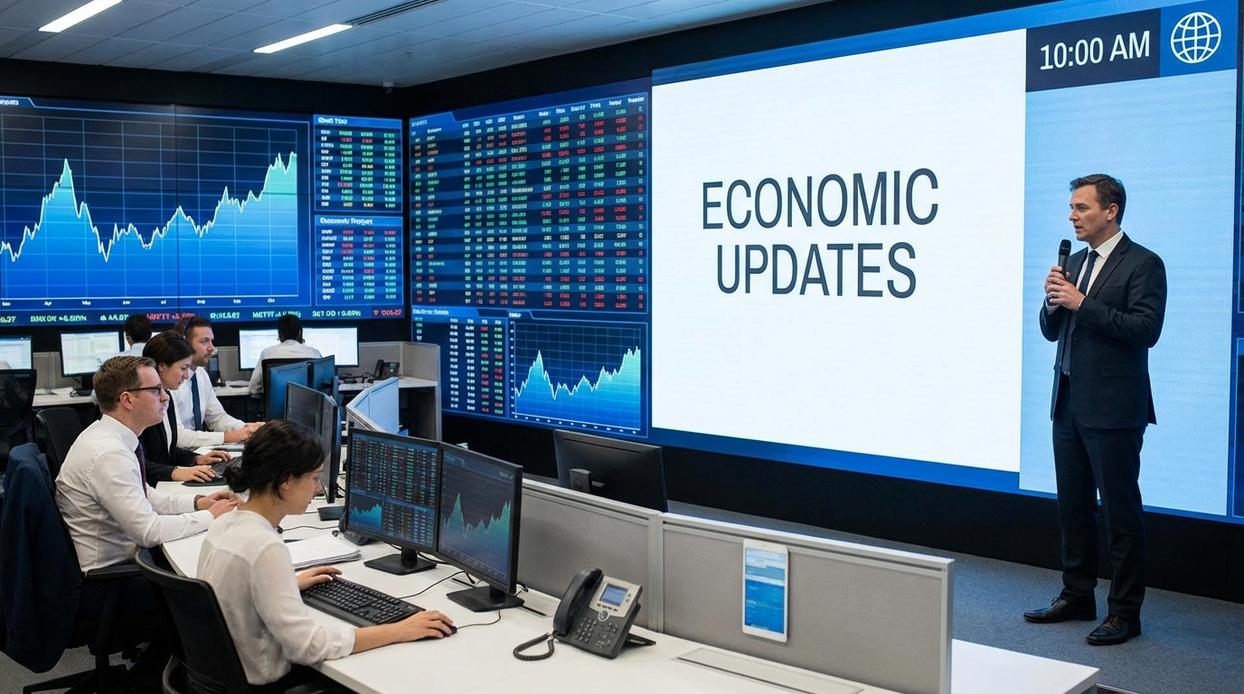
China’s trade balance—its exports minus imports—is often called a GLOBAL GROWTH SIGNAL for good reason. As the world’s largest goods exporter (World Trade Organization), China sits at the center of modern supply chains. When its trade numbers shift, markets listen.
Exports measure goods sold abroad. Strong export growth usually signals healthy global demand—think U.S. and European consumers buying electronics, machinery, and textiles. Imports, on the other hand, reflect domestic appetite. Rising imports of iron ore, copper, and semiconductors suggest robust industrial activity at home (a quiet vote of confidence in China’s economy).
Why does this matter for you?
- A surge in Chinese imports often boosts the Australian Dollar (AUD) due to Australia’s heavy commodity exports to China (Reserve Bank of Australia data).
- Weak export data can pressure the Hang Seng Index, which is sensitive to mainland-linked firms.
- Commodity prices like iron ore and copper frequently react within hours of the release.
These releases are key entries on weekly economic calendar events, often triggering sharp volatility.
Some argue China’s data lacks transparency. That’s fair. But even skeptics trade the reaction because capital flows follow momentum.
For portfolio positioning, strong trade data can justify exposure to emerging market ETFs and commodity-linked assets—while also complementing strategies discussed in understanding inflation cycles and their impact on asset prices. Pro tip: wait for confirmation from price action before reallocating.
Strategic Positioning for a Data-Heavy Week
When markets brace for major data, risk management comes first. That means trimming position sizes, tightening stop-loss orders (pre-set levels that automatically exit a losing trade), and avoiding over-leverage—borrowing capital to amplify exposure. Some traders argue that big weeks demand big bets. After all, volatility creates opportunity. Fair point. But unchecked leverage during high-impact releases can erase weeks of gains in minutes (and usually does when confidence is highest).
Next, focus on expectations. Markets often price in consensus forecasts ahead of weekly economic calendar events. The real opportunity lies in the deviation—the gap between expectation and reality. If inflation prints slightly hot but equities plunge dramatically, ask: is this reaction justified by fundamentals, or is it emotional overshoot? A simple framework helps: compare the surprise magnitude, prior positioning, and cross-asset confirmation before acting.
For those expecting volatility but not direction, options strategies like straddles and strangles allow traders to potentially profit from sharp moves either way. Critics say options are complex and costly. True, premiums can be expensive during volatile periods. However, defined risk and flexibility often outweigh the cost.
Finally, patience pays. Let the initial spike settle. Once liquidity returns and narratives stabilize, clearer setups emerge.
Your Strategic Outlook for the Coming Sessions
This week revolves around U.S. inflation, European industrial health, and Chinese trade dynamics. In 2023, a CPI surprise moved the S&P 500 more than 2% in one session (Bureau of Labor Statistics data), proving how sensitive markets remain. Eurozone industrial production has contracted in readings (Eurostat), while China’s export swings have shifted prices.
The challenge? Navigating weekly economic calendar events without reacting emotionally.
A strategic approach means:
- Reviewing data expectations versus prior releases
- Defining risk before entry
- Protecting capital with disciplined stops
Stay focused. Follow your plan. Let data guide decisions.
Position Yourself for the Week Ahead
You came here to make sense of the market noise and identify where real opportunity lies. Now you have a clearer view of the global drivers shaping Asia-centric markets, the trading strategies aligned with current momentum, and the portfolio adjustments that can protect and grow your capital.
Markets move fast—and missing key shifts in sentiment, liquidity, or macro trends can cost you real returns. Staying reactive is expensive. Staying prepared is powerful.
This week, apply what you’ve learned: align your trades with prevailing trends, rebalance where risk is elevated, and stay alert to macro catalysts that could impact volatility. Small, informed adjustments now can prevent major setbacks later.
If you’re serious about sharpening your edge, start tracking market-moving data daily, refine your strategy with disciplined risk management, and lean on proven, data-backed insights. Thousands of active traders rely on our timely market analysis and strategy guidance to stay ahead.
Don’t let uncertainty dictate your portfolio. Take control of your next move—review your positions, adjust with confidence, and stay connected to insights that keep you one step ahead.
 Zyvaris Tornhaven has opinions about global investment insights. Informed ones, backed by real experience — but opinions nonetheless, and they doesn't try to disguise them as neutral observation. They thinks a lot of what gets written about Global Investment Insights, Expert Breakdowns, Practical Portfolio Optimization is either too cautious to be useful or too confident to be credible, and they's work tends to sit deliberately in the space between those two failure modes.
Reading Zyvaris's pieces, you get the sense of someone who has thought about this stuff seriously and arrived at actual conclusions — not just collected a range of perspectives and declined to pick one. That can be uncomfortable when they lands on something you disagree with. It's also why the writing is worth engaging with. Zyvaris isn't interested in telling people what they want to hear. They is interested in telling them what they actually thinks, with enough reasoning behind it that you can push back if you want to. That kind of intellectual honesty is rarer than it should be.
What Zyvaris is best at is the moment when a familiar topic reveals something unexpected — when the conventional wisdom turns out to be slightly off, or when a small shift in framing changes everything. They finds those moments consistently, which is why they's work tends to generate real discussion rather than just passive agreement.
Zyvaris Tornhaven has opinions about global investment insights. Informed ones, backed by real experience — but opinions nonetheless, and they doesn't try to disguise them as neutral observation. They thinks a lot of what gets written about Global Investment Insights, Expert Breakdowns, Practical Portfolio Optimization is either too cautious to be useful or too confident to be credible, and they's work tends to sit deliberately in the space between those two failure modes.
Reading Zyvaris's pieces, you get the sense of someone who has thought about this stuff seriously and arrived at actual conclusions — not just collected a range of perspectives and declined to pick one. That can be uncomfortable when they lands on something you disagree with. It's also why the writing is worth engaging with. Zyvaris isn't interested in telling people what they want to hear. They is interested in telling them what they actually thinks, with enough reasoning behind it that you can push back if you want to. That kind of intellectual honesty is rarer than it should be.
What Zyvaris is best at is the moment when a familiar topic reveals something unexpected — when the conventional wisdom turns out to be slightly off, or when a small shift in framing changes everything. They finds those moments consistently, which is why they's work tends to generate real discussion rather than just passive agreement.