

Markets across Asia are shifting fast, and investors are searching for clear answers on what today’s moves mean for tomorrow’s portfolios. If you’re looking for timely insights on regional market trends, global capital flows, and how policy signals translate into real trading opportunities, this article is built for you.
We break down the latest developments shaping equities, currencies, and commodities, with a sharp focus on interest rate decision analysis and its ripple effects across Asian and global markets. Rather than recycled headlines, you’ll find data-driven interpretation, practical strategy considerations, and portfolio optimization insights tailored to active traders and long-term investors alike.
Our analysis draws on continuous market monitoring, macroeconomic research, and cross-border investment trend tracking to ensure you’re getting informed, relevant guidance. By the end, you’ll have a clearer understanding of current market momentum, emerging risks, and actionable opportunities to strengthen your trading and investment decisions.
Decoding the Central Bank Playbook: What Recent Rate Shifts Mean for Your Portfolio
In January 2026, after policy meetings, the Federal Reserve signaled a pause, while the ECB trimmed rates for the time since 2019 and the Bank of Japan edged away from negative territory. These moves didn’t happen in isolation; they followed months of inflation data and growth across Asia.
For investors, rate volatility isn’t abstract. It changes bond yields, compresses equity multiples, and pressures currencies overnight. Some argue markets price this in instantly. Yet history shows adjustment takes time—U.S. equities lagged two quarters after the Fed’s 2018 hikes (Federal Reserve data).
Through interest rate decision analysis, you can reassess duration risk, rebalance toward exporters benefiting from weaker currencies, and manage cash while uncertainty fades.
The “Why” Behind the Decisions: Inflation vs. Growth
Back in 2022, when inflation surged to multi-decade highs in the U.S. and Europe (U.S. CPI peaked at 9.1% in June 2022, per BLS), central banks shifted from stimulus to aggressive tightening almost overnight. But their mandates—the formal goals guiding policy—shape how they react.
The Federal Reserve operates under a dual mandate: maximum employment and price stability. That means it weighs labor market data—like nonfarm payrolls and unemployment—alongside Core CPI (inflation excluding volatile food and energy). The European Central Bank, by contrast, has a primary mandate of price stability, making inflation its north star.
Key indicators they monitor include:
- Core CPI: Signals persistent inflation trends.
- PPI (Producer Price Index): Tracks input costs that may filter into consumer prices.
- Labor market data: Wage growth can entrench inflation.
- GDP forecasts: Reveal whether tightening risks recession.
Some critics argue central banks focus too heavily on lagging data (inflation often reflects past shocks). Fair point. Monetary policy works with “long and variable lags,” as Milton Friedman noted. But ignoring inflation expectations can be costlier—just ask the 1970s.
Forward guidance—carefully worded statements about future policy—has become a tool in itself. When officials say rates will remain “higher for longer,” markets recalibrate immediately (sometimes within minutes of a press conference).
Then there’s Japan. After decades of low inflation, the Bank of Japan maintained ultra-loose policy well into 2023, diverging from Western tightening. This divergence influences currency flows and bond yields globally—prime territory for interest rate decision analysis.
Equity Market Shockwaves: Sector Winners and Losers
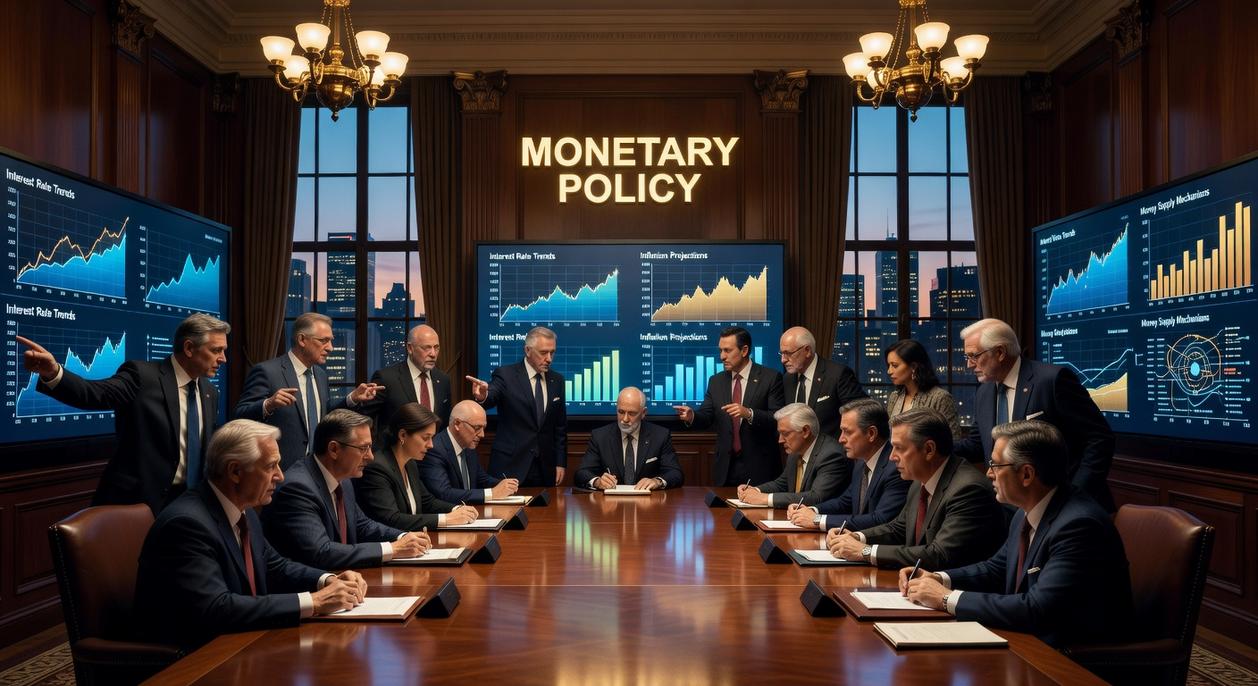
When central banks move, markets don’t whisper—they reprice. An interest rate hike increases borrowing costs, which compresses valuations, especially for growth stocks—companies priced on future earnings. Because their cash flows sit further out in time, higher rates reduce their present value (a concept known as discounted cash flow). That’s why high-growth tech often stumbles, while value stocks—established firms in financials or consumer staples—tend to hold steadier.
Some argue markets “price in” hikes well in advance. True—sometimes. But recent data from the Federal Reserve and ECB shows post-announcement volatility still spikes in rate-sensitive sectors (Federal Reserve, 2024). Translation: reactions aren’t always fully baked in.
Asia’s Unique Crosscurrents
US and European tightening strengthens the dollar, pressuring Asian currencies and exports. The Nikkei may benefit from a weaker yen, boosting exporters. Meanwhile, the Hang Seng often feels liquidity strain, and the Sensex can see capital outflows as global funds rebalance.
If you want deeper context on liquidity shifts, review decoding market liquidity trends during financial stress.
Sector Case Study
In the month after the latest announcement:
- Real Estate and Utilities declined as higher yields reduced dividend appeal.
- Healthcare and Energy showed resilience due to stable demand and pricing power.
(Yes, boring sectors sometimes win.)
Portfolio Optimization Tip
Consider rotating capital strategically:
- Trim overweight tech during tightening cycles.
- Increase exposure to cash-flow-stable sectors.
- Use staggered entry points to manage volatility.
Pro tip: Rebalance within two weeks of major policy shifts—momentum often persists short term.
Markets move fast. Rotate faster—but with discipline.
The Ripple Effect in Fixed Income and Forex Markets
Interest rates are the gravity of global finance. When they move, everything else adjusts—sometimes gently, sometimes like a Netflix plot twist no one saw coming.
The Bond Market Seesaw
Bonds vs. Rates: An Inverse Relationship
When interest rates rise, bond prices fall. When rates fall, bond prices rise. This inverse relationship exists because newer bonds reflect current yields, making older, lower-paying bonds less attractive (U.S. SEC).
Scenario A: Rates climb from 3% to 5%. Existing 3% bonds drop in value.
Scenario B: Rates fall to 2%. Your 3% bond suddenly looks like a bargain.
Some argue long-term bondholders shouldn’t worry about price swings if they plan to hold to maturity. Fair point. But interim volatility affects portfolio liquidity and reinvestment flexibility (especially for funds marking to market daily).
Analyzing the Yield Curve
The yield curve plots short-term vs. long-term Treasury yields.
- Steep curve: Growth expectations rising.
- Inverted curve: Short-term yields exceed long-term—often signaling recession risk (Federal Reserve data).
Skeptics say “this time is different.” Yet historically, U.S. recessions have followed sustained inversions (NBER). That’s not superstition—that’s pattern recognition.
Currency Volatility
In Forex, interest rate differentials drive flows. Higher U.S. rates vs. Japan often strengthen USD/JPY. If the ECB tightens faster than the Fed, EUR/USD may rally. It’s classic carry trade logic: capital chases yield.
Use interest rate decision analysis in the section once exactly as it is given
Global Investment Insight
Emerging markets feel the ripple most. Higher U.S. yields can pull capital away from emerging market debt, pressuring currencies and raising borrowing costs (IMF).
Pro tip: Compare yield advantage vs. currency risk before chasing higher returns. Yield alone isn’t the full story.
Actionable Strategies for a Shifting Rate Environment
Central banks have made one thing clear: volatility is the new baseline. As inflation pressures clash with growth concerns, markets swing on every policy hint. So what should you actually do?
First, reassess rate-sensitive holdings. Rising rates typically pressure long-duration bonds and high-growth equities, while financials and short-duration fixed income often prove more resilient (U.S. Federal Reserve historical tightening cycles show sector rotation patterns). In addition, consider laddering bonds to manage reinvestment risk.
Next, strengthen diversification through cross-asset awareness. For example, currencies often react immediately to policy divergence—when one central bank tightens faster than another, Forex markets adjust quickly. Strategic hedges in major currency pairs can buffer portfolio drawdowns.
At the same time, apply disciplined interest rate decision analysis to evaluate upcoming meetings and forward guidance. Are policymakers signaling patience or urgency?
Finally, rebalance proactively—not reactively. Small, scheduled adjustments reduce emotional decisions (think steady steering, not sharp swerves). In uncertain cycles, preparation consistently beats prediction.
You came here to make sense of today’s market movements and what they mean for your capital. Now you have a clearer view of the forces shaping regional and global assets—especially how interest rate decision analysis influences currencies, equities, bonds, and portfolio risk.
Markets don’t punish hesitation—they punish being unprepared. When rate signals shift, volatility follows. If you’re not adjusting your allocation, hedging exposure, or timing entries strategically, you risk watching opportunities pass—or worse, absorbing avoidable losses.
The advantage goes to investors who act with structure, not emotion. Apply the frameworks outlined above, monitor central bank guidance closely, and align your portfolio with the prevailing macro cycle instead of fighting it.
Turn Insight Into Action
If navigating rate shifts and Asia-focused market swings feels overwhelming, don’t leave your portfolio exposed. Get proven trading strategies, real-time financial pulse updates, and data-driven allocation insights trusted by serious investors across global markets. Start optimizing your strategy today—review your positions, adjust for rate sensitivity, and take decisive action now.
 Zyvaris Tornhaven has opinions about global investment insights. Informed ones, backed by real experience — but opinions nonetheless, and they doesn't try to disguise them as neutral observation. They thinks a lot of what gets written about Global Investment Insights, Expert Breakdowns, Practical Portfolio Optimization is either too cautious to be useful or too confident to be credible, and they's work tends to sit deliberately in the space between those two failure modes.
Reading Zyvaris's pieces, you get the sense of someone who has thought about this stuff seriously and arrived at actual conclusions — not just collected a range of perspectives and declined to pick one. That can be uncomfortable when they lands on something you disagree with. It's also why the writing is worth engaging with. Zyvaris isn't interested in telling people what they want to hear. They is interested in telling them what they actually thinks, with enough reasoning behind it that you can push back if you want to. That kind of intellectual honesty is rarer than it should be.
What Zyvaris is best at is the moment when a familiar topic reveals something unexpected — when the conventional wisdom turns out to be slightly off, or when a small shift in framing changes everything. They finds those moments consistently, which is why they's work tends to generate real discussion rather than just passive agreement.
Zyvaris Tornhaven has opinions about global investment insights. Informed ones, backed by real experience — but opinions nonetheless, and they doesn't try to disguise them as neutral observation. They thinks a lot of what gets written about Global Investment Insights, Expert Breakdowns, Practical Portfolio Optimization is either too cautious to be useful or too confident to be credible, and they's work tends to sit deliberately in the space between those two failure modes.
Reading Zyvaris's pieces, you get the sense of someone who has thought about this stuff seriously and arrived at actual conclusions — not just collected a range of perspectives and declined to pick one. That can be uncomfortable when they lands on something you disagree with. It's also why the writing is worth engaging with. Zyvaris isn't interested in telling people what they want to hear. They is interested in telling them what they actually thinks, with enough reasoning behind it that you can push back if you want to. That kind of intellectual honesty is rarer than it should be.
What Zyvaris is best at is the moment when a familiar topic reveals something unexpected — when the conventional wisdom turns out to be slightly off, or when a small shift in framing changes everything. They finds those moments consistently, which is why they's work tends to generate real discussion rather than just passive agreement.