
The era of China as the world’s low-cost factory is over, replaced by a sweeping transformation that is redefining global capital flows. This china economic rebalancing impact is disrupting supply chains, reshaping commodity demand, and challenging long‑held investment assumptions. For investors, the stakes are high: portfolios built on yesterday’s growth model may be exposed to new risks—and miss emerging opportunities. Drawing on deep, Asia‑centric market data and on-the-ground economic indicators, this analysis cuts through the noise to examine which sectors stand to gain, which face structural headwinds, and how to strategically position investments for China’s new economic reality.
From Global Factory to Domestic Consumer: What’s Really Changing?
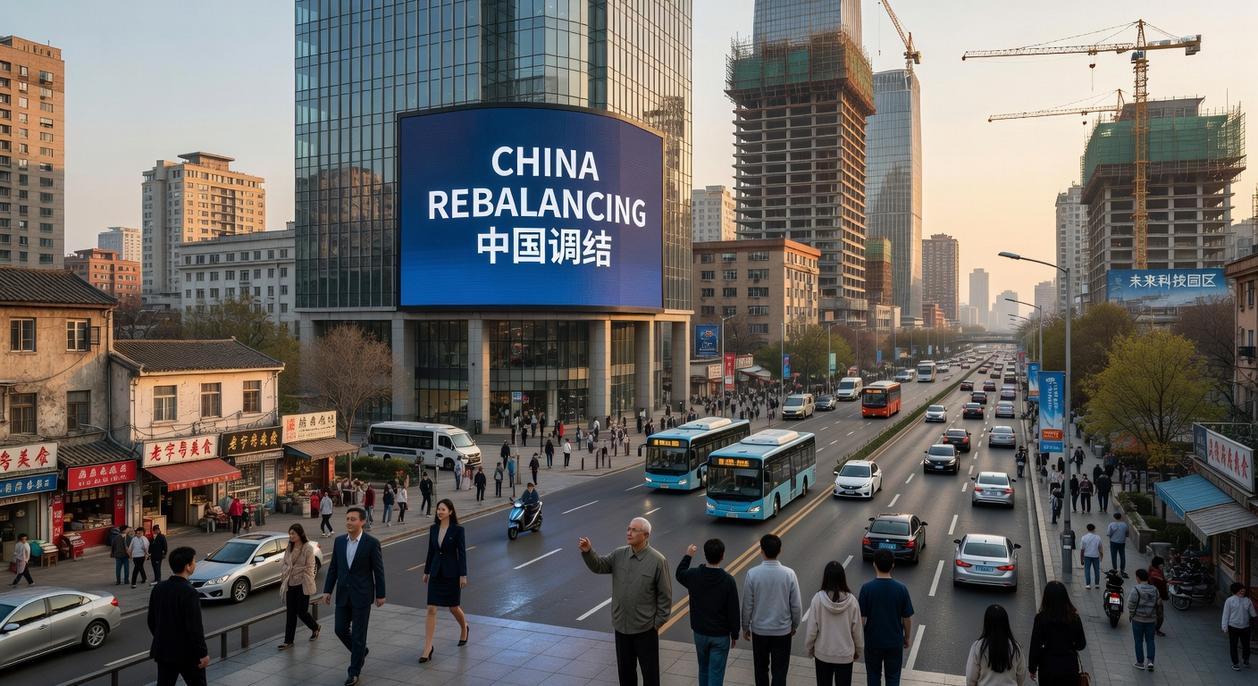
China’s core pivot is straightforward in theory but massive in practice: shifting from an economy powered by fixed-asset investment (think highways, high-speed rail, endless apartment blocks) and exports to one driven by domestic consumption, services, and technological self-sufficiency. In other words, fewer cranes on the skyline, more chips in smartphones.
This transition is guided by the “dual circulation” strategy—an approach that prioritizes the domestic market (“internal circulation”) while still engaging global trade (“external circulation”). The goal is resilience: reduce dependence on foreign demand and critical technologies. Given export controls and trade tensions, that’s less a preference and more a necessity.
Why This Shift Isn’t Optional
Demographics are the immovable object. An aging population shrinks the workforce and dampens property demand (World Bank). Add elevated local government debt and supply chain vulnerabilities, and the old steel-and-concrete model looks increasingly fragile.
So what replaces it? Semiconductors, green energy, healthcare innovation, and digital services. The blueprint favors higher-value industries over volume manufacturing. Critics argue consumption cannot easily replace exports; that’s fair. However, policy incentives and capital allocation suggest Beijing is serious.
For investors, the china economic rebalancing impact means rethinking sector exposure. Tilt toward advanced manufacturing and renewables, and diversify regionally—see indias equity growth story opportunities and structural risks. Pro tip: prioritize firms aligned with policy tailwinds, not just headline growth.
The Ripple Effect on Global Commodity Markets
Industrial metals are feeling the strain. As real estate and infrastructure activity cools, demand for iron ore, copper, and aluminum softens. That shift directly pressures mining-heavy economies like Australia and Brazil, where export revenues hinge on construction cycles. However, understanding this transition gives traders an edge: pricing weakness can create tactical short opportunities and better entry points for long-term allocations.
Meanwhile, energy demand is evolving. Instead of coal-fired industrial expansion, capital is rotating toward lithium, cobalt, and other battery inputs tied to electric vehicles and green technology. This creates new winners while leaving legacy producers exposed. For investors, the benefit is clear: aligning portfolios with policy-backed sectors improves risk-adjusted return potential.
At the same time, rising incomes are boosting demand for premium food imports. North America, South America, and New Zealand stand to gain from higher-quality agricultural exports. Recognizing the china economic rebalancing impact helps position early in these growth corridors.
Consequently, the old commodity supercycle thesis deserves revision. Rather than assuming endless demand, traders should prepare for policy-driven volatility and shorter cycles. That flexibility ultimately enhances portfolio resilience and opportunity capture. Staying informed turns disruption into measurable advantage for disciplined investors.
Navigating New Winners and Losers in Global Equities
China’s growth model is shifting—and the data backs it up. Fixed asset investment growth has slowed from double-digit rates in the 2000s to low single digits in recent years (World Bank), pressuring global industrial exporters. German machinery exports to China have declined meaningfully from their 2021 peak, while Japanese heavy equipment orders tied to Chinese construction have softened. These firms were classic “Old China” proxies—deeply tied to infrastructure and property cycles.
By contrast, the china economic rebalancing impact is lifting consumer-facing sectors. China now accounts for roughly 20–25% of global luxury demand (Bain & Company), supporting European high-end brands even amid domestic volatility. International tourism is rebounding, with outbound Chinese travel projected to continue recovering toward pre-2019 levels (UNWTO). Global pharmaceutical firms are also benefiting as healthcare spending rises alongside an aging population.
In tech, the divide is sharper. U.S. semiconductor exports to China have fallen due to restrictions (U.S. Commerce Department data), hurting firms reliant on volume chip sales. Yet companies supplying non-replicable lithography and advanced manufacturing tools continue to see resilient demand (think ASML’s EUV systems—there’s no easy substitute).
Portfolio tilt considerations:
- Underweight global industrials tied to infrastructure cycles
- Overweight premium consumer discretionary brands with strong China penetration
- Selectively own high-end semiconductor equipment leaders
(Pro tip: follow revenue exposure disclosures—not headlines—when assessing risk concentration.)
Currency volatility sounds abstract, but it simply means a currency’s value moves more than usual. When we talk about the Yuan’s evolving role, we mean China may allow its currency to fluctuate as it shifts from export-led growth to domestic consumption. A structurally weaker Yuan can make exports cheaper, but it also pressures trading partners. For example, Australia’s dollar often tracks Chinese demand for commodities, so shifts in the Yuan ripple into AUD/USD. The EUR/USD pair can react too, especially when global risk sentiment changes.
Global Bond Markets and Capital Flows
A slowdown in China affects its appetite for U.S. Treasuries, which are government bonds used to finance deficits. Lower demand can nudge global yields higher, influencing borrowing costs worldwide (see IMF analysis: https://www.imf.org).
Foreign Direct Investment — long-term cross-border business investment — is also shifting. Traditional manufacturing FDI has cooled, while capital targets high-tech and consumer sectors. This selectivity reflects the china economic rebalancing impact.
Some argue currency moves are temporary noise. Yet for Asia-Pacific portfolios, currency hedging — strategies that offset exchange-rate risk — is increasingly essential (pro tip: review hedge ratios quarterly). Volatility is risk, but also opportunity for prepared investors. Clarity reduces costly surprises. globally.
A Practical Guide to Portfolio Positioning for the New Era
You set out to understand how to position your portfolio for a structural shift, not a temporary cycle. The reality is clear: the china economic rebalancing impact is permanent, and portfolios still tied to the old “Factory of the World” model face mounting long-term risk. Industrial commodities and heavy machinery no longer offer the same tailwinds, while global consumer brands and specialized technology aligned with China’s consumption-driven growth stand to benefit.
Now is the time to act. Review your holdings, reduce exposure to outdated growth engines, and reallocate toward companies built for this new era. Don’t let legacy positioning erode returns—start your portfolio review today and realign for durable global growth.