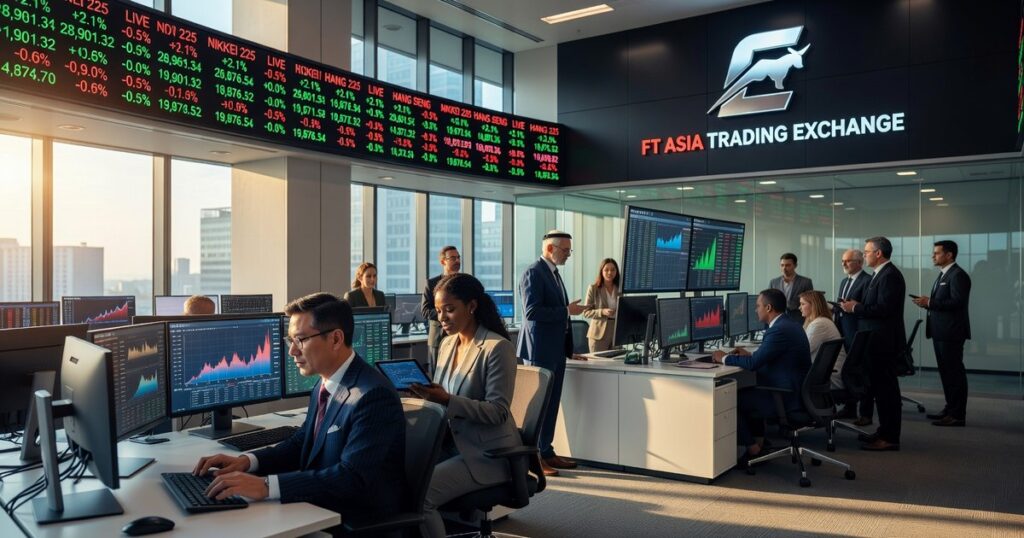
I’ve spent years tracking how money moves across Asian markets and I can tell you this: most traders pick the wrong platform.
You’re trying to get into Far East Asia but you’re hitting walls. The regulations don’t make sense. Currency conversions eat your profits. You can’t even access the markets you want.
It’s not your fault. Asian markets operate differently than what you’re used to.
I’ve analyzed how successful international traders approach this problem. They don’t just pick the platform with the best marketing. They look at specific criteria that actually matter when you’re dealing with Tokyo, Hong Kong, Singapore, and Shanghai.
This guide shows you exactly what to look for. I’ll walk you through the real factors that determine whether a platform can handle Asian market complexity or whether it’ll leave you stuck.
ftasiatrading focuses on helping traders understand these markets. We watch global investment flows daily and track which platforms actually deliver on their promises.
You’ll learn how to evaluate market access, understand regulatory requirements, and spot the hidden costs that kill returns. I’ll show you what separates platforms that work for Asian trading from ones that just claim they do.
No fluff about being a global citizen investor. Just the practical framework you need to choose a platform that won’t let you down when you’re ready to trade.
Why Far East Asian Markets Demand a Specialized Approach
Most trading platforms treat Asia like it’s just another market.
They’re not built for what actually happens here.
I’ve watched traders move from US markets to Asia and get blindsided. They assume the same tools and strategies will work. Then they hit their first Hong Kong holiday during a volatile week and realize their platform wasn’t ready for it.
Here’s what makes Far East Asian markets different.
Market Fragmentation: Unlike the US or Europe
Asia isn’t one market. It’s dozens of them operating under completely different rules.
The Tokyo Stock Exchange runs on different settlement cycles than HKEX. Singapore has its own regulatory framework. Each exchange has unique listing requirements and trading mechanisms.
Compare this to trading US equities. You’ve got the NYSE and NASDAQ, sure. But they operate under the same SEC oversight with similar hours and settlement processes.
In Asia? The ftasiatrading exchange landscape requires you to understand multiple regulatory bodies. What works on TSE might not fly in Hong Kong.
Liquidity and Volatility Patterns
Trading hours alone create problems most platforms ignore.
Tokyo opens when New York is asleep. Hong Kong and Singapore overlap but close before European markets hit their stride. This creates liquidity gaps that can wreck your execution if you’re not prepared.
Then there are the holidays. Golden Week in Japan. Lunar New Year across multiple markets. These aren’t just days off. They’re periods where liquidity dries up and volatility spikes.
A platform built for Western markets won’t account for these patterns. You need systems that understand when Asian markets are thin and adjust your risk accordingly.
Currency and Capital Controls
Managing JPY, HKD, and SGD simultaneously isn’t like switching between USD and EUR.
Each currency has different volatility profiles. Hong Kong’s peg to the dollar behaves differently than the yen’s free float. Singapore manages its currency within a band rather than targeting a specific rate.
Capital controls add another layer. Moving money in and out of certain markets takes planning. Some require documentation that Western platforms never ask for.
You need forex capabilities that go beyond basic conversion. Real-time rates, hedging tools, and an understanding of how capital flows actually work in these markets.
That’s not standard equipment on most trading platforms.
The Core Checklist: 7 Essential Features of a Top-Tier Asian Trading Platform
You’re looking at Asian trading platforms and they all sound the same.
They promise low fees. Fast execution. Access to everything.
But when you actually start trading, you realize half of what you need isn’t there.
I’ve tested dozens of platforms over the years. Some looked great on paper but fell apart when I tried to execute a simple trade on the Hong Kong exchange at 9:30 AM.
Now, some traders will tell you that features don’t matter. They say you should just pick the cheapest platform and deal with whatever limitations it has. After all, trading is about strategy, not tools.
And sure, I get where they’re coming from. A bad trader with a great platform is still a bad trader.
But here’s what that argument misses.
The right platform doesn’t make you a better trader. It just stops getting in your way. And when you’re dealing with Asian markets (which operate differently than Western ones), those obstacles add up fast.
Let me walk you through what actually matters.
Direct Market Access: Why Your Orders Need a Straight Shot
DMA means your orders go straight to the exchange.
No middleman. No delay while someone else decides how to route your trade.
Think of it this way. Without DMA, your order goes to the broker first. They bundle it with other orders or send it through their own system. By the time it hits the exchange, the price might have moved.
With DMA, you’re competing on the same playing field as institutional traders. Your order hits the exchange in milliseconds.
This matters more in Asian markets because liquidity can be thinner than what you see in New York or London. A few seconds of delay can mean the difference between getting filled at your price or watching the opportunity disappear.
Comprehensive Market Coverage: Beyond the Obvious Stocks
Most platforms give you access to the big names. Alibaba. Tencent. Samsung.
But what about the mid-cap manufacturer in Taiwan that’s cornering the semiconductor supply chain? Or the ETF that tracks Vietnam’s consumer growth?
A real platform covers multiple exchanges. Tokyo. Hong Kong. Singapore. Seoul. Sometimes even smaller markets like Thailand or Indonesia.
And it’s not just stocks. You need ETFs for broader exposure. Derivatives if you want to hedge. Even smaller companies that might be tomorrow’s breakout stories.
If your platform only offers the headline names, you’re trading with one hand tied behind your back.
Multi-Currency Accounts: Stop Bleeding Money on Conversions
Here’s something most people don’t think about until it costs them.
Every time you convert USD to Japanese yen to buy a stock, you pay a conversion fee. Then when you sell and convert back, you pay again. Do this enough times and those fees eat into your returns.
A proper multi-currency account lets you hold money in different currencies. You can settle trades in the local currency without constant conversions.
This also protects you from exchange rate swings. If you’re holding yen and the dollar weakens, you’re not automatically losing value just sitting in cash.
Asia-Centric Research & Data: Information That Actually Helps
Real-time data feeds matter.
But so does research that understands the region. A report written by someone in New York about a Chinese tech company often misses the local context. They don’t know the regulatory environment. They don’t understand the competitive dynamics.
Look for platforms that provide research from analysts who actually cover Asian markets full-time. People who know that a policy shift in Beijing can reshape an entire sector overnight.
The exchange ftasiatrading operates in this space precisely because generic Western research doesn’t cut it when you’re trading Asian equities.
Regulatory Compliance: Who’s Actually Watching Your Broker
This isn’t exciting but it matters.
The Monetary Authority of Singapore (MAS) and the Securities and Futures Commission (SFC) in Hong Kong are serious regulators. If your platform is licensed by them, it means something.
It means they have to maintain capital requirements. They have to follow strict rules about how they handle your money. They get audited.
A platform regulated in some offshore jurisdiction you’ve never heard of? That’s a red flag.
Localized Support: Help When You Actually Need It
Asian markets don’t trade on New York hours.
Tokyo opens at 9 AM Japan time. Hong Kong at 9:30 AM local. If something goes wrong and you need help, you can’t wait for a support team in London to wake up.
You need support that operates in the right time zones. People who understand that the Shanghai Stock Exchange has different settlement rules than the NYSE.
I’ve been stuck before with a failed trade and no one to call because the support team didn’t start until 8 AM Eastern. That’s 9 PM in Tokyo. The damage was already done.
Robust Security Protocols: Protecting What You’ve Built
Two-factor authentication should be standard. Not optional.
Your account should use encryption for everything. And your funds should sit in segregated accounts, separate from the broker’s operating capital.
Why does segregation matter? Because if the broker goes under, your money isn’t mixed in with theirs. It’s protected.
I know security feels like something you can worry about later. But once your account gets compromised or your broker collapses, it’s too late to care about protocols.
Look, not every platform will check all seven boxes. But the more of these features you have, the fewer headaches you’ll deal with when you’re actually trying to trade.
Navigating the Regulatory Maze: Compliance and Risk Management
Most traders think regulations are just red tape.
I used to think the same way. Fill out the forms, jump through the hoops, and get on with trading.
But here’s what changed my mind.
The platform’s regulatory home tells you everything about what happens when things go wrong. And trust me, things will go wrong at some point (whether it’s a disputed trade or a withdrawal issue).
Some people argue that heavy regulation just slows down innovation and makes trading more expensive. They say the best platforms are the ones with the lightest touch. Look at how fast unregulated exchanges can move, they’ll tell you.
Fair point. But here’s the problem with that thinking.
When your funds are sitting on a platform registered in a jurisdiction with weak investor protections, you’re basically hoping nothing bad happens. That’s not a strategy. That’s just wishful thinking.
I’ve seen what happens when platforms like ftasiatrading operate under solid regulatory frameworks versus those that don’t. The difference shows up in dispute resolution and how quickly you can actually get your money back.
Understanding where your platform is registered matters more than most people realize.
The KYC and AML stuff? Yeah, it’s annoying. Uploading your ID, proving your address, waiting for verification. I get the frustration.
But think about it from another angle. A platform that doesn’t care who’s using it probably doesn’t care much about anything else either. The paperwork is actually a good sign, not a hassle to complain about.
Here’s my prediction: within the next two years, we’ll see tax reporting become the main differentiator between platforms. Right now, most traders scramble at tax time trying to piece together their transaction history. The platforms that can generate clean reports compatible with different countries’ requirements? They’re going to win big.
And one more thing about hedging tools.
You need access to options or other ways to protect your positions. Currency swings and market drops don’t announce themselves ahead of time. The ability to hedge isn’t fancy. It’s basic risk management that every serious trader should have available.
Global Brokers vs. Regional Specialists: A Head-to-Head Comparison
You know that feeling when you’re trying to order authentic Thai food but end up at a chain restaurant that also serves pizza and burgers?
That’s kind of what using a global broker for Asian markets feels like sometimes.
I’m not saying global brokers are bad. They’re just trying to do everything for everyone. And when you’re trading on exchange ftasiatrading or diving deep into Asian equities, that approach has some real limitations.
Let me break this down.
The Global Broker Appeal
Big names like Charles Schwab or Interactive Brokers give you one login for everything. You can buy Apple stock in the morning and Japanese REITs in the afternoon without switching platforms.
That convenience matters. Especially if you’re building a truly global portfolio.
The interface is polished. Customer service speaks English. And your accountant won’t hate you at tax time because everything’s in one neat statement.
But here’s where it gets tricky. Those platforms charge premium fees for Asian market access (if they offer it at all). You might find yourself locked out of smaller cap stocks that regional investors trade every day. And good luck getting someone on the phone who actually understands the nuances of Singapore’s market structure.
Why Regional Specialists Win on Depth
Now flip the script.
Regional brokers live and breathe Asian markets. They know which stocks move on lunar new year patterns. They execute trades faster because their servers are actually in Hong Kong or Singapore, not routed through New York first.
I’ve seen the difference myself. A friend tried to catch a momentum play on a Thai stock through his global broker. By the time his order went through, the opportunity was gone. Meanwhile, traders using regional platforms were already in and out.
You also get management tips ftasiatrading insights that global platforms just don’t provide. Real analysts who cover these markets full time, not as an afterthought.
The downside? You might need separate accounts for different countries. And yeah, some interfaces look like they were designed in 2008 (because they probably were).
So Which One Should You Pick?
Here’s my take.
If you’re dabbling in Asian markets as maybe 10% of your portfolio, stick with your global broker. The convenience wins out.
But if Asia is a serious part of your strategy? You need a regional specialist. The execution quality and market access will pay for themselves pretty quickly.
And honestly, the best answer for serious traders is both. Use your global broker as home base and add a regional account for focused plays. It’s more work upfront but gives you the best of both worlds.
Making Your Strategic Move into Asian Markets
You came here to find the right trading platform for Far East Asia. Now you have a framework that works.
I know how overwhelming Asia’s markets can feel. Different regulations, multiple currencies, time zones that don’t match yours. It’s a lot to process.
But here’s what I’ve learned: The right platform cuts through that complexity.
When you focus on direct market access, multi-currency support, and solid regulatory oversight, you’re not just picking a tool. You’re building a foundation that protects your capital and opens doors.
The platforms that succeed in Asia aren’t the ones with the flashiest features. They’re the ones that handle the basics exceptionally well and give you real-time access when it matters.
Start your evaluation today. Use this checklist to compare what’s actually available against what you need.
ftasiatrading connects you with the data and analysis that makes these decisions clearer. We focus on Asia because that’s where the opportunities are, and we know what works in these markets.
Your next step is simple: Take this framework and start narrowing down your options. The sooner you move, the sooner you’re positioned to capture what’s happening in Far East Asia right now. Homepage. Ftasiatrading Ecommerce Tips.